PART 01 / PURPOSE & THE ADMINISTRATIVE BURDEN

Remember Why You Got Into Law.

You didn’t endure three grueling years of law school, the bar exam, and decades of relentless trial pressure to spend 68% of your working life managing PDF folders at midnight.

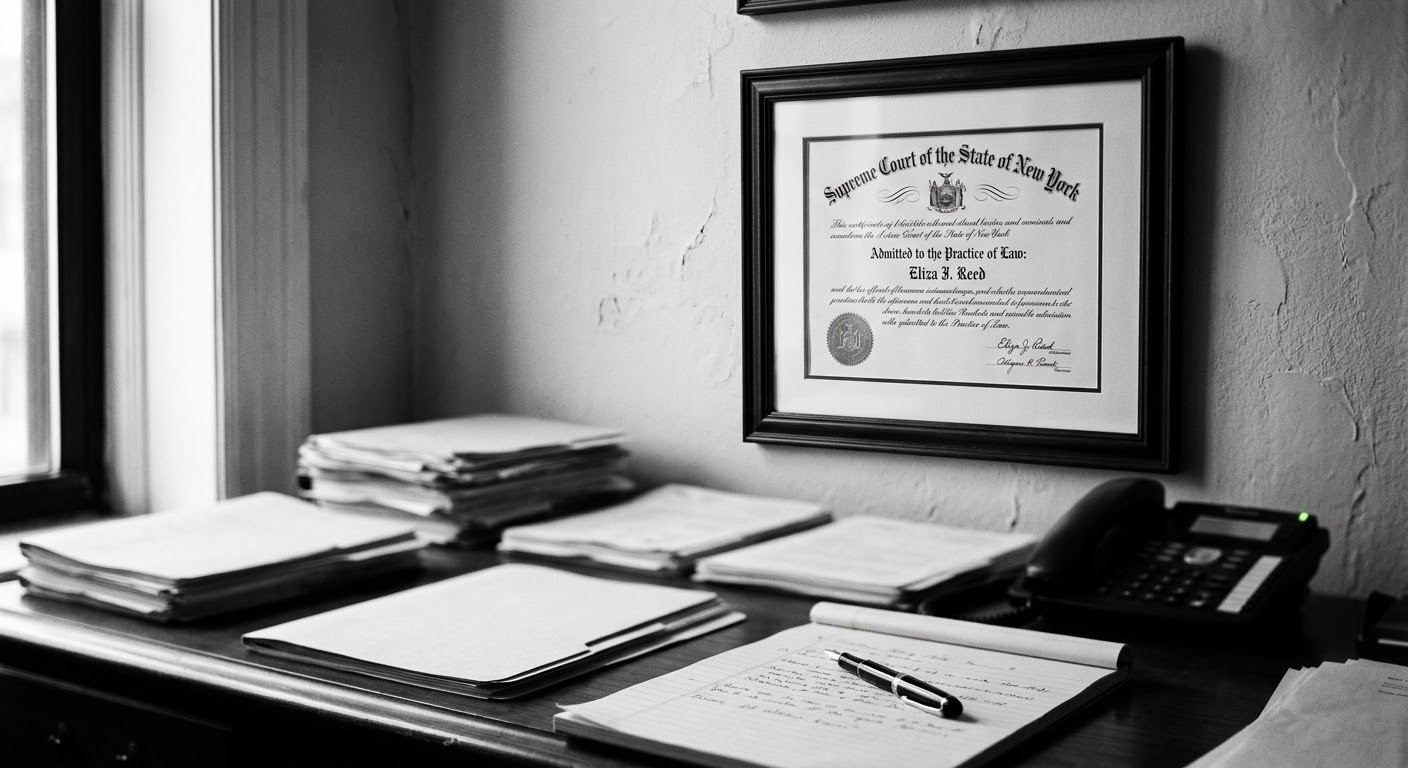
Solitary lawyer desk with framed New York Supreme Court bar admission diploma, yellow legal pad, and fountain pen in classic black and white
PLATE 1.1 The solitary desk of the sworn advocate. The framed license on the wall carries a solemn obligation to the court and client—not an obligation to drown in paper.

There is a quiet, sacred moment that every practicing attorney remembers: the morning your bar results were posted. You took the constitutional oath. You hung the heavy parchment on your office wall. You stepped into a centuries-old guild with a singular, noble purpose: to stand between a client and catastrophe.

You became a lawyer to argue the critical motion before a judge who has heard every excuse. You became a lawyer to lock eyes with an evasive corporate witness in a deposition room and extract the single admission that breaks a defense wide open. You became a lawyer to synthesize complex human tragedy into a compelling closing argument that commands twelve jurors to deliver justice.

You did not get into law to rename Bates-stamped medical records. You did not get into law to cross-reference conflicting deposition page-line citations across six Word documents until your eyes burn at 2:00 AM. And you certainly did not get into law to surrender your strategic genius to the grinding mechanics of administrative overhead.

“The tragedy of modern litigation is not that cases have become more complex. It is that the lawyer has been forced to become a clerk in their own firm.”

The 68% Evidentiary Tax

In 2025, empirical practice audits from the American Bar Association and state bar surveys revealed a devastating statistic: the average solo and small-firm civil litigator spends only 2.8 hours of an 8-hour workday on actual legal analysis, trial strategy, and client advocacy.

The remaining 68% of the litigator’s career is consumed by what courtroom veterans call the Evidentiary Logistics Tax:

68%
Non-Advocacy Overhead

Hours spent hunting down exhibits, formatting chronologies, checking local rules, and manual document review.

4,200+
Average Discovery Pages

The typical single-plaintiff catastrophic injury or commercial dispute record dumped by defense counsel.

1 in 4
Contradictions Missed

Key impeachment admissions buried in voluminous records that human fatigue fails to surface before trial.

Top-down view of an attorney working late at a desk with desk lamp, open brief on laptop, notepad notes, and family photo
PLATE 1.2 The 9:00 PM Reality. When Big Law dumps 20,000 pages of discovery, they aren't trying to inform you—they are trying to exhaust you.

The Four Emotional Archetypes of the Trial Bar

No two litigators are identical, but every lawyer who chose to hang their own shingle or lead a boutique practice falls into one of four distinct callings. Every one of them is currently paying this 68% penalty:

⚖️

The Defender of the Individual

Plaintiff & Personal Injury Trial Lawyers

Driven by visceral empathy for the severely injured or defrauded. They face well-funded insurance defense cartels who use discovery volume as a weapon of attrition. They risk their own capital on contingency, carrying the psychological weight of their clients' livelihoods.

🛡️

The Shield of Enterprise

Commercial & Boutique Defense Litigators

Dedicated to risk mitigation, contractual truth, and defending businesses from extortionate claims. Trapped between client demands for cost predictability and the grinding hours required to inspect multi-gigabyte transactional records.

🏛️

The Craftsperson of Order

Appellate & Dispositive Motion Specialists

Deep scholars of the law who find beauty in statutory harmony, precedent, and elegant written advocacy. Suffocated by the tedious mechanics of manual record citation formatting and jurisdictional rulebook verification.

The Community Anchor

Main Street Solos & General Practitioners

The trusted counselor to families, small business owners, and civic institutions. Expected to know everything from probate and property to torts and contract law—while simultaneously operating as their own IT department, bookkeeper, and receptionist.
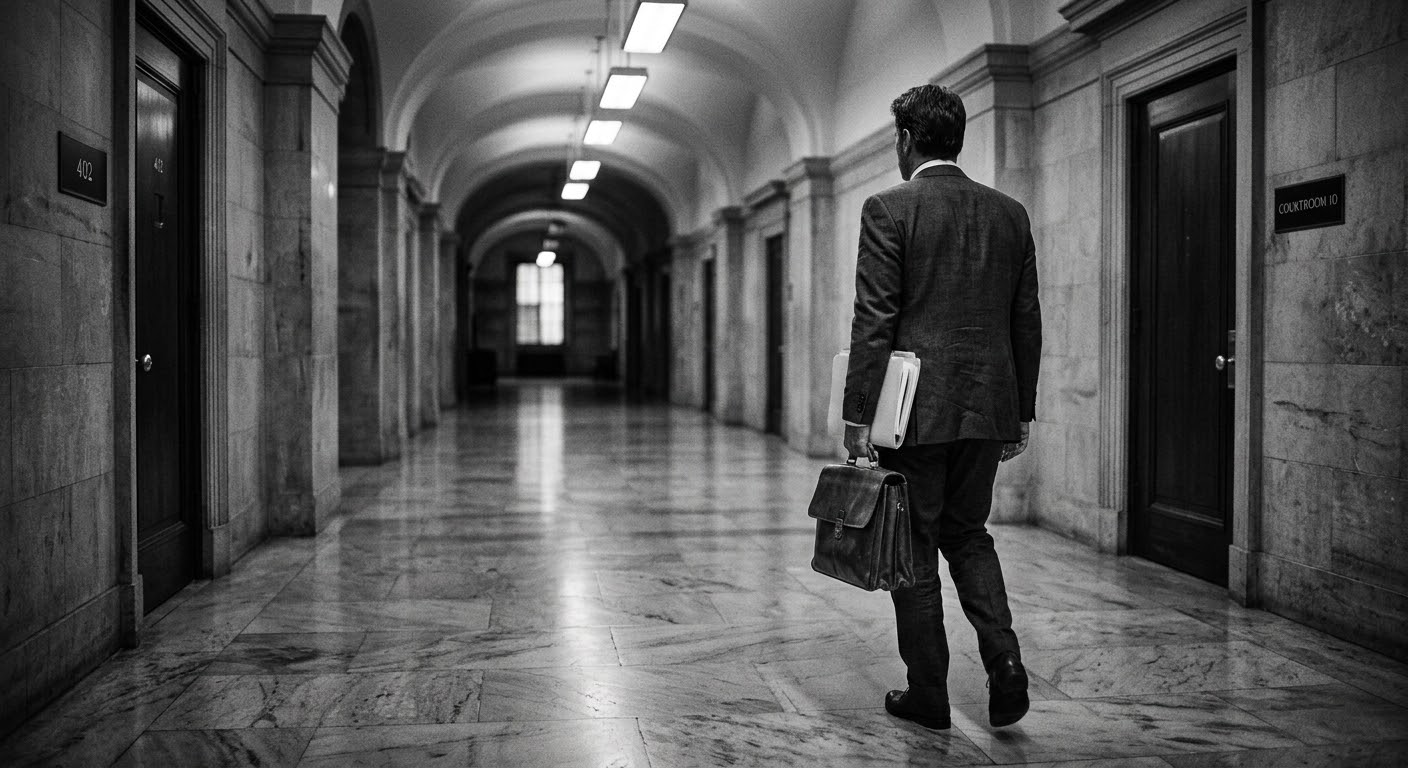
Trial attorney walking alone down a high-ceilinged marble courthouse corridor toward Courtroom 10 carrying briefcase and case files
PLATE 1.3 Walking into Courtroom 10. When the courtroom doors close, the jury does not care how many associates sit in a downtown tower. They care who commands the facts.

The problem is not that solo practitioners lack intellect or grit. The problem is that the tools given to them for the last twenty years were designed to store files—not to win cases.
PART 02 / FORENSIC ANALYSIS & ETHICAL RESPONSIBILITY

The Case That Changed Everything
(Wasn’t About AI).

Mata v. Avianca was not a failure of attorney ethics. It was a product design catastrophe. Here is the forensic truth of what the courts actually punished—and the 5-stage ethical framework for responsible practice.

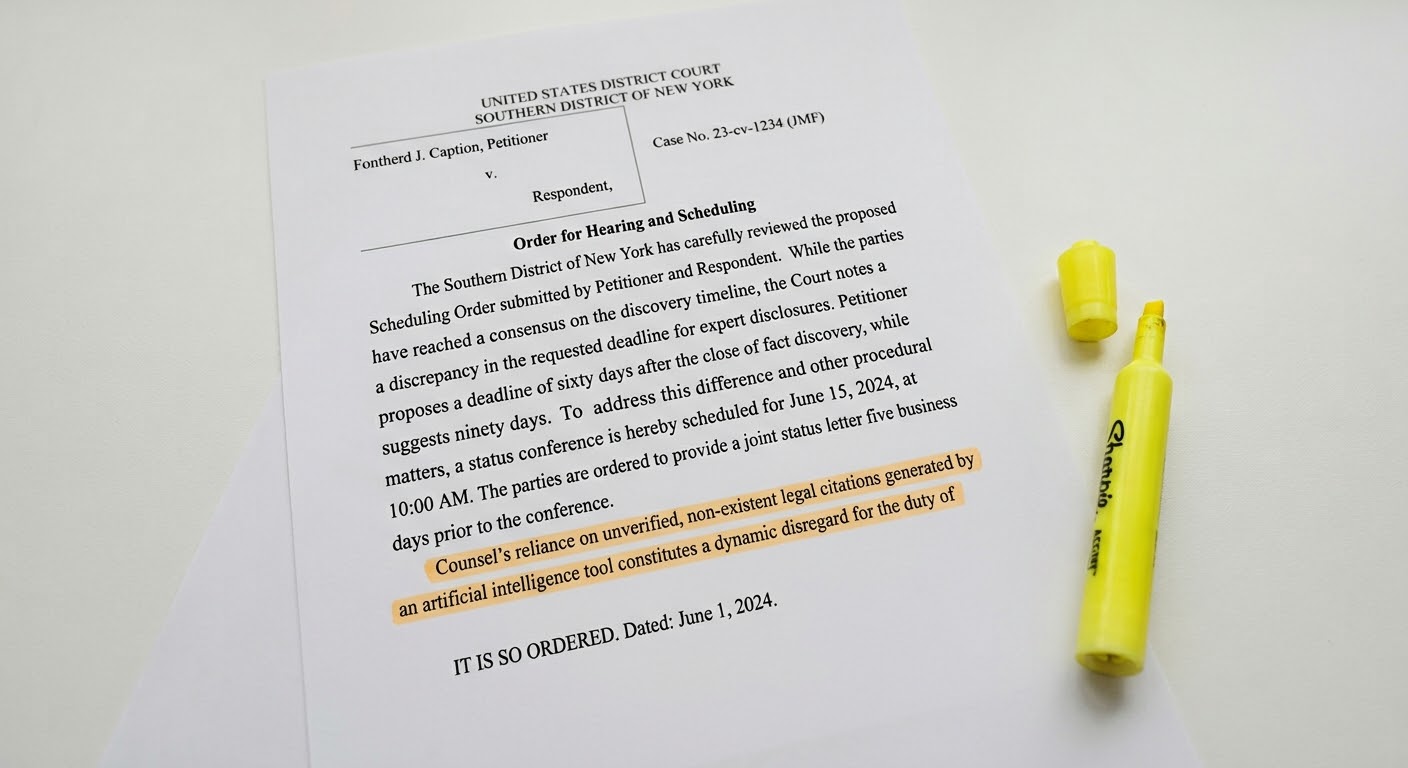
Federal court order from the Southern District of New York with highlighted judicial rebuke regarding unverified AI citations
PLATE 2.1 United States District Court for the Southern District of New York. The highlighted order in Mata v. Avianca that sent shockwaves through the global legal community.

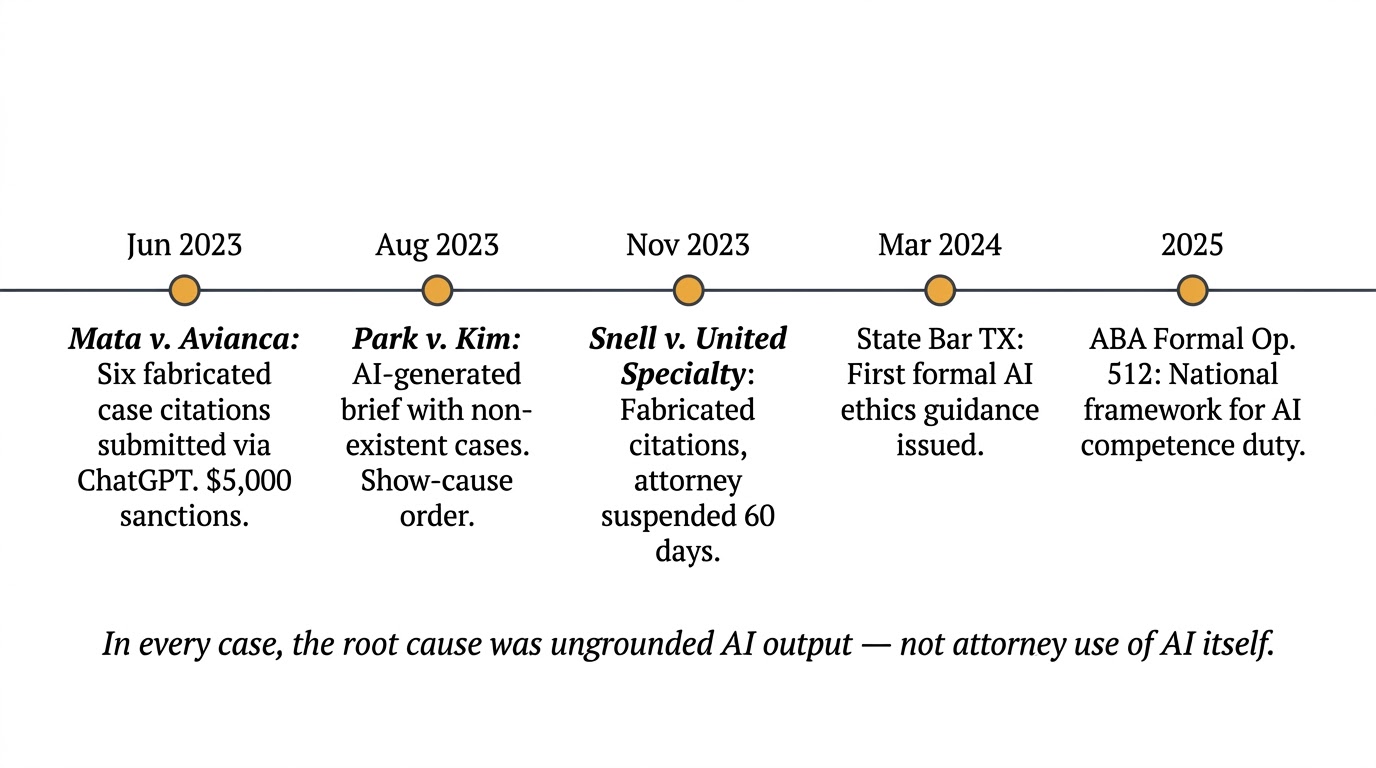
In June 2023, Judge P. Kevin Castel of the Southern District of New York issued a sanctions order that froze the legal profession in its tracks. In Mata v. Avianca, Inc., a veteran litigator with over thirty years of unblemished practice submitted an opposition brief citing bogus judicial decisions: Varghese v. China Southern Airlines, Martinez v. Delta Air Lines, and Zicherman v. Korean Air Lines.

None of these decisions existed. They were manufactured by ChatGPT.

Legal commentators reacted with mockery. State bar journals ran panic-stricken cover stories declaring artificial intelligence a malpractice landmine. Law firms issued blanket bans forbidding their attorneys from touching LLMs.

The legal commentariat drew the exact wrong conclusion.

The Forensic Truth: A Failure of Toolmakers, Not Lawyers

What happened in Mata was not a moral failing or deliberate deceit. It was a fundamental mismatch between the nature of civil litigation and the architecture of consumer chatbots:

  • LLMs are Probabilistic Word Engines: Consumer models like ChatGPT and Claude are trained to generate statistically plausible strings of English text. They do not know what a court reporter is. They do not verify whether a volume number in the Federal Reporter exists.
  • The Illusion of Authority: When the attorney asked the chat interface if the citations were real, the model—acting as an autocomplete engine—cheerfully answered, “Yes, they are in the Federal Reporter.”
  • Zero Record Provenance: The tool provided no link, no PDF snippet, no cryptographic hash, and no bounding box back to an authentic docket.
Chronological timeline of generative AI in court: Mata v. Avianca, Park v. Kim, Snell v. United Specialty, State Bar of Texas guidance, and ABA Formal Opinion 512
PLATE 2.2 The Chronology of Legal AI Jurisprudence (2023–2026). In every single judicial sanction, the root cause was ungrounded generative output—never the attorney's use of computational assistance itself.

Fear vs. Reality: What the Dockets Prove

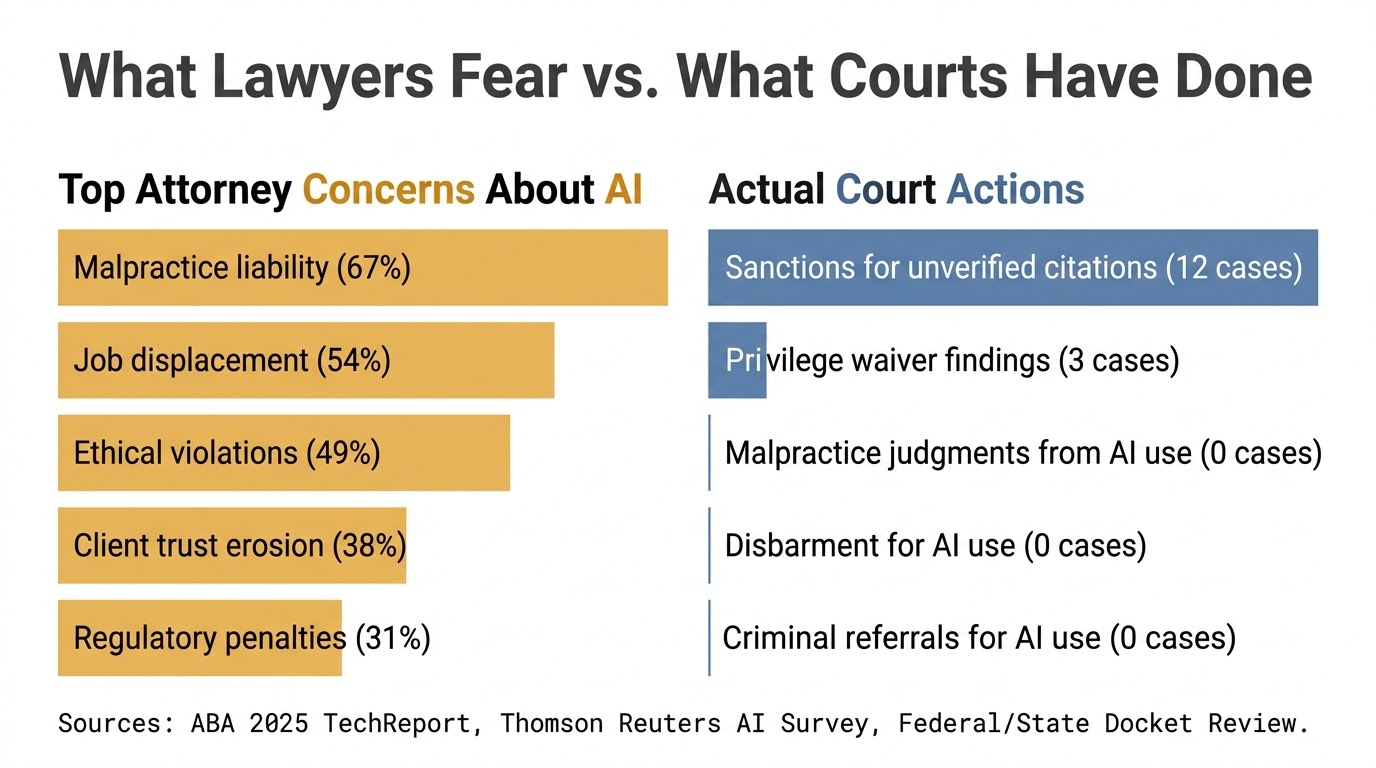
Over the past three years, the legal industry was inundated with fear-mongering regarding malpractice liability and disbarment. But when you inspect every federal and state court sanction order between 2023 and 2026, the empirical data tells a vastly different story:

Statistical chart comparing top attorney fears about AI against actual federal and state court judicial actions
PLATE 2.3 What Lawyers Fear vs. What Courts Have Done. Data compiled from the ABA 2025 TechReport, Thomson Reuters AI Survey, and comprehensive Federal/State Docket review.

The key finding: Out of tens of thousands of active federal matters, there have been exactly zero malpractice judgments, zero disbarments, and zero criminal referrals resulting from AI usage.

Every judicial sanction stemmed from a single failure: submitting unverified citations that lacked primary record grounding.

The 5-Stage Ethical Practice Framework

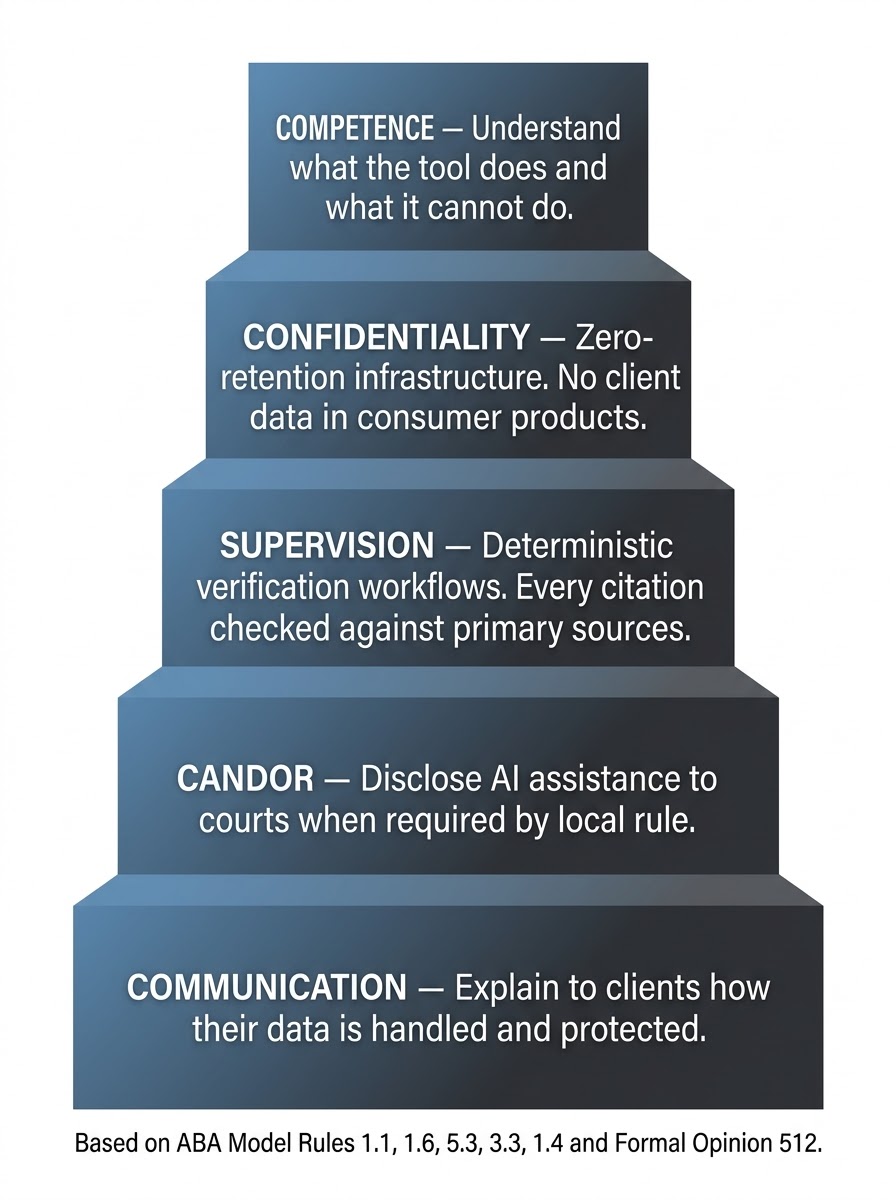
In 2024 and 2025, the American Bar Association issued Formal Opinion 512 (Generative Artificial Intelligence Tools), establishing the national standard for ethical AI integration. It is anchored in five foundational Model Rules:

Five-tiered ethical competence pyramid: Competence, Confidentiality, Supervision, Candor, Communication under ABA Model Rules
PLATE 2.4 The 5-Tiered Ethical Competence Framework under ABA Model Rules 1.1, 1.6, 5.3, 3.3, and 1.4.
ABA RULE 1.1

Duty of Competence

A lawyer must understand the benefits and risks associated with relevant technology. In litigation AI, competence means refusing to rely on probabilistic text generators and demanding 100% deterministic sentence-level citations backed by primary source documents.

ABA RULE 1.6

Duty of Confidentiality

Client matter records must never enter public model training loops or consumer cloud databases. True litigation platforms utilize zero-retention, encrypted enterprise enclaves where client work product remains strictly privileged.

ABA RULE 5.3

Supervision of Non-Lawyer Assistance

The partner must supervise computational tools with the same rigor applied to a junior associate or contract paralegal. The platform must provide an instant inspection trail—allowing the lawyer to click any cited statement and view the highlighted deposition transcript line in under 500 milliseconds.

ABA RULE 3.3

Candor Toward the Tribunal

Every factual assertion made in a Motion for Summary Judgment or trial brief must be anchored to genuine testimony, Bates-stamped exhibits, or authentic statutory code. Never allow an algorithm to synthesize facts that do not exist in the record.

ABA RULE 1.4

Communication & Billing Integrity

Under ABA Formal Opinions 93-379 and 512, software subscriptions cannot be hidden in billable hours. Reimbursable litigation tools must be billed on a transparent, per-matter disbursement basis ($695/case), fully recoverable from client trust accounts (IOLTA) or gross settlement funds.

PART 03 / THE SCALED SOLO & THE FUTURE OF ADVOCACY

A New Way of Practicing.

The 50-person litigation department now fits on a single desk. How record-grounded intelligence restores the British Barrister model to the American trial bar.

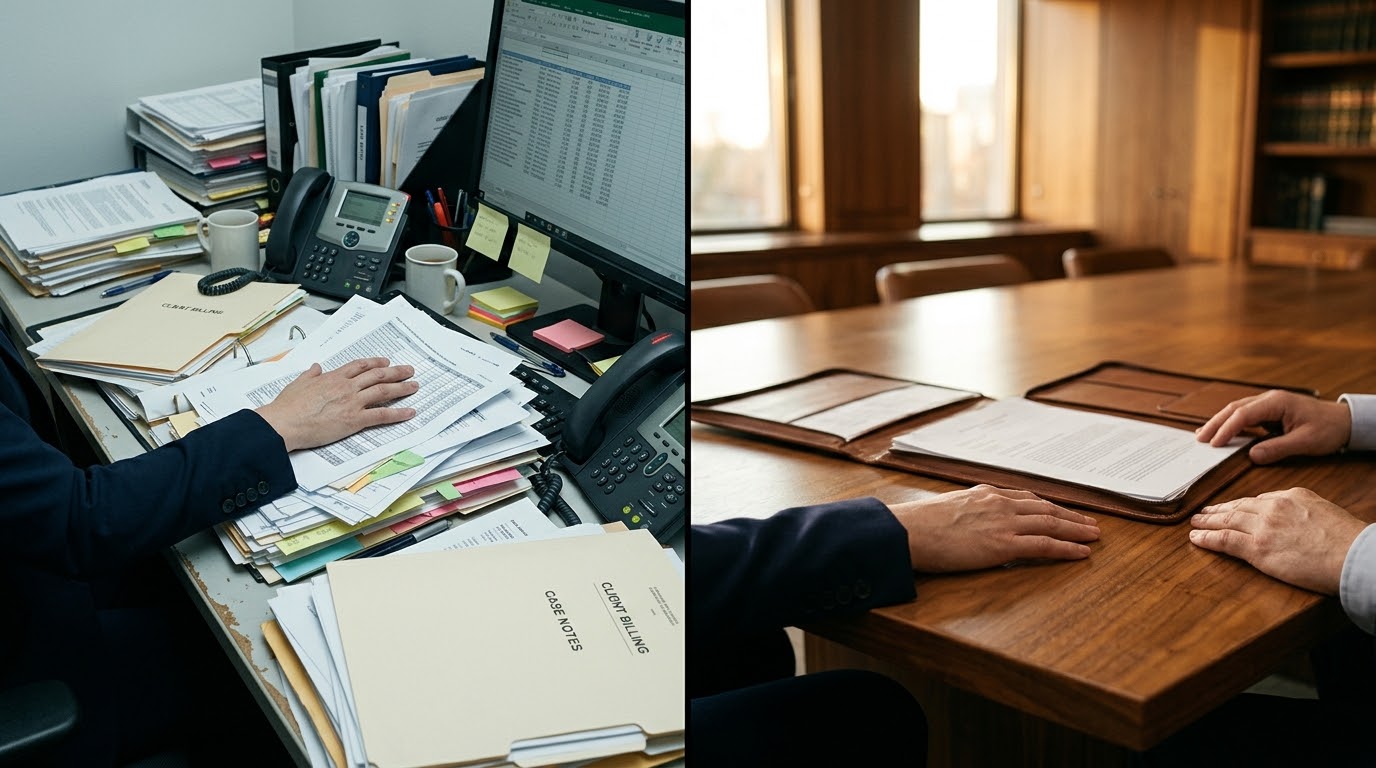
Split-screen visual contrast between an overcrowded, stressful paperwork desk and a serene, sunlit conference table
PLATE 3.1 The Great Transition. From the crushing paper-sorting nightmare of 1995 to the serene, high-leverage conference table of the modern Scaled Solo.

For hundreds of years, the English legal system maintained a brilliant institutional division of labor: the Solicitor and the Barrister.

The solicitor handled client intake, administrative paper shuffling, discovery logistics, and document assembly. The barrister was the specialized trial specialist—the master advocate who stepped into the courtroom with an immaculate grasp of the record, cross-examined witnesses with surgical precision, and delivered decisive oral advocacy.

In the American legal system, this division was collapsed. Every solo practitioner was forced to become their own solicitor, file clerk, paralegal, and office administrator—spending 70% of their energy on logistics and fighting with one hand tied behind their back against Big Law litigation armies.

Today, that dynamic has inverted.

“When technology assumes 100% of the solicitor’s administrative burden with mathematical precision, the American trial lawyer is reborn as pure Barrister.”

The 10 Roles of the Solo Litigator — Elevated

Consider the ten exhausting operational roles that a solo or boutique trial attorney historically balanced—and see how modern record-grounded compilation reclaims their true calling:

Operational Role The Old Reality (Manual Grunt Work) The Scaled Solo Reality (Koce Intelligence)
1. Document Intake Clerk Days spent manually splitting, rotating, and indexing 5,000-page scanned medical PDFs. Out-of-core OCR extraction in minutes with automated docket metadata tagging.
2. Chronology Builder Copy-pasting dates into Word tables, constantly losing track of source page numbers. Instant master chronologies with 100% sentence-level line and page citations.
3. Contradiction Hunter Relying on memory or scribbled sticky notes to catch an expert witness contradicting their prior depo. Automated contradiction mapping cross-referencing all case transcripts simultaneously.
4. Damages Accountant Manual spreadsheet math prone to fatal Excel rounding errors and billing audit rejections. Deterministic SymPy math AST engines with Pint medical billing unit validation.
5. Courtroom Trial Tech Paying $5,000 to external trial graphics vendors for simple callout slides. Instant FRE 107-compliant visual demonstratives and animated timelines.
6. MSJ Opposition Drafter Pulling all-nighters to find counter-evidence for 40 separate undisputed factual assertions. Record-grounded rebuttal matrices mapping evidence directly to each defense assertion.
7. Live Deposition Wingman Fumbling through three-ring binders while a hostile witness changes their story. Real-time RTMS deposition co-pilot surfacing impeachment citations live during Zoom testimony.
8. Overhead Administrator Paying $2,000/month in non-reimbursable SaaS seat licenses that erode firm profit. $695/matter lifecycle disbursement 100% reimbursable from client trust accounts.
9. Client Counselor Rushed 5-minute phone calls squeezed between frantic filing deadlines. 100% Human: Unhurried, empathetic counsel that builds lifelong client trust.
10. Courtroom Master Advocate Exhausted at trial, fighting off sleep while delivering opening statements. 100% Human: Confident, formidable, and commanding total mastery of the facts.
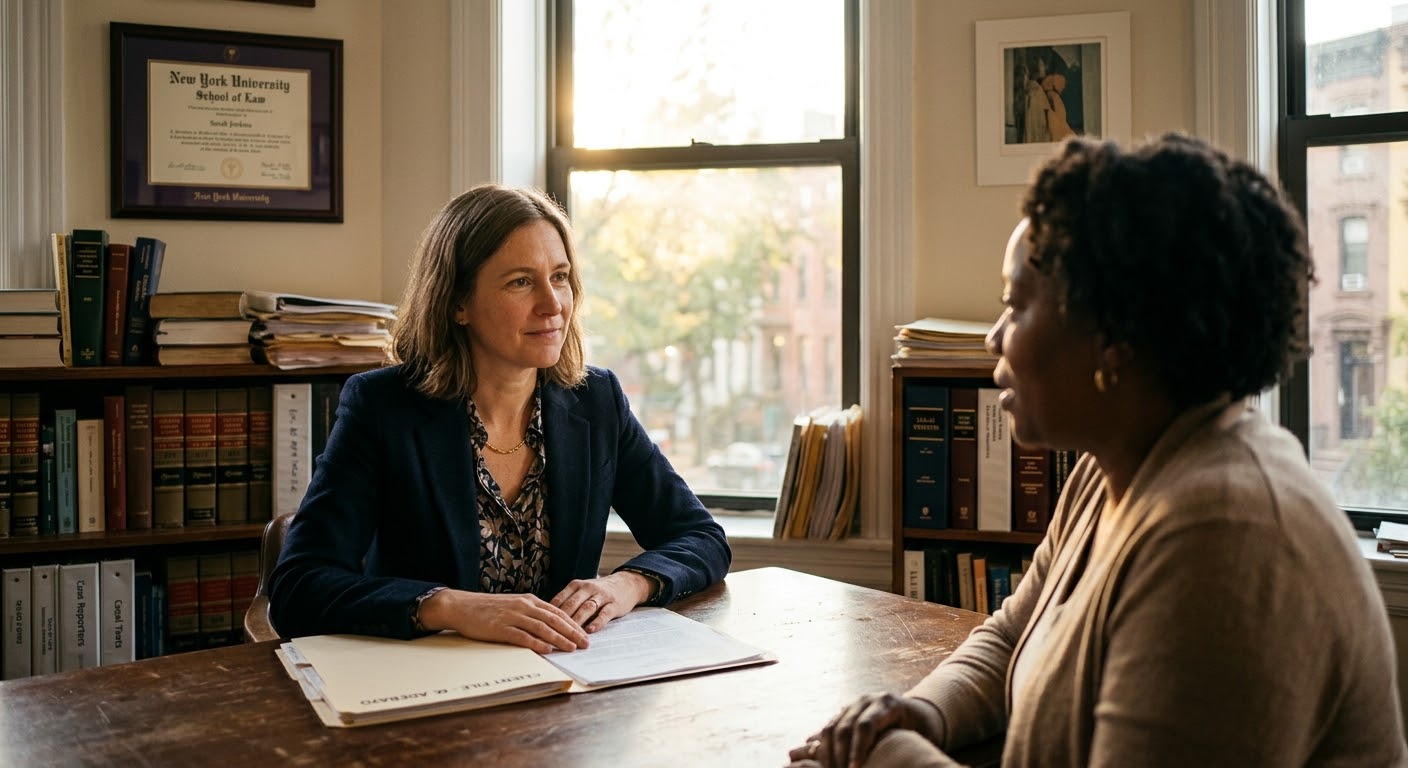
Meaningful in-person attorney-client consultation in a warm, sunlit law library office
PLATE 3.2 The Human Essence of Law. When evidentiary logistics are solved, the lawyer has time to truly listen, advise, and counsel.
Female litigator conducting a high-stakes remote video deposition with calm focus and real-time record intelligence
PLATE 3.3 The Modern Deposition. Armed with real-time contradiction detection, a single lawyer controls the examination with lethal accuracy.

The Delta Lawyer: Mind, Machine & Heart

For decades, the legal academy praised the "T-shaped lawyer"—an attorney with broad general knowledge and deep technical legal expertise. But in the modern trial landscape, that model is obsolete.

The new standard is the Delta Lawyer: a tri-dimensional practitioner who fuses deep substantive legal acumen with computational leverage and emotional intelligence.

Δ

The Tri-Dimensional Litigator

01

Substantive Legal Craft

Deep knowledge of rules of evidence, tort principles, statutory interpretation, and trial tactics.

02

Deterministic Leverage

Command of out-of-core record engines, cited chronologies, and mathematical damages validation.

03

Human Persuasion

Empathy, jury storytelling, cross-examination presence, and fierce ethical advocacy.

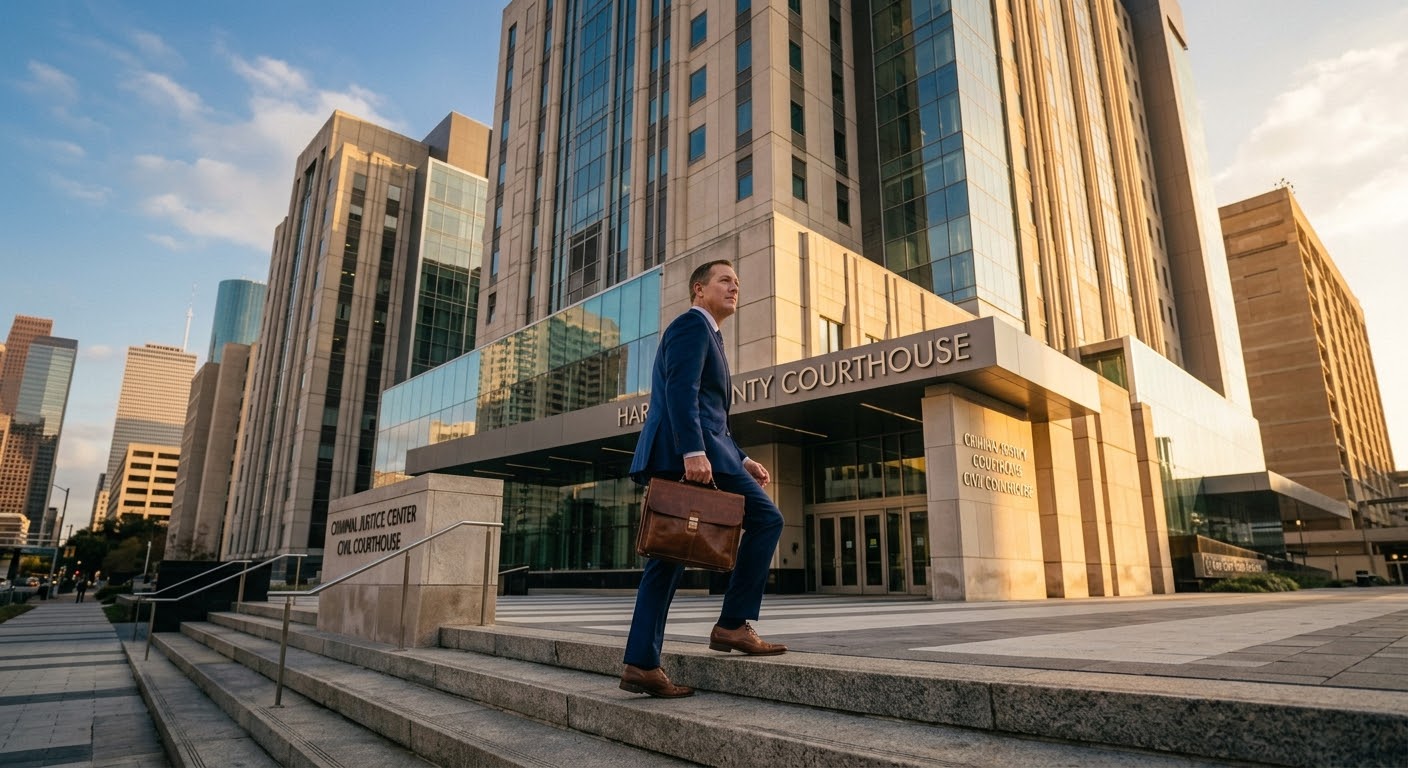
Confident trial attorney ascending the steps of the Harris County Civil Courthouse in radiant morning golden light
PLATE 3.4 The Ascendant Advocate. Walking into the Harris County Civil Courthouse knowing every fact, every date, and every contradiction in the 10,000-page record.

The Scaled Solo Manifesto

We reject the premise that justice belongs only to firms with marble lobbies and 200 billable-hour associates.

We believe that the single most formidable force in an American courtroom is one brilliant, dedicated trial attorney who knows the record better than anyone else in the room.

When you eliminate the 68% administrative tax, you don’t just get your nights and weekends back. You get your legal superpower back. You become the litigator you promised yourself you would be the day you received your bar card.

This is the Practice of One. And the future of civil litigation starts today.

EXPERIENCE THE SCIENCE OF WINNING

See Your Next Case File Compiled with 100% Cited Provenance.

Upload your messy 3,000-page deposition and medical record bundle. Our trial technology team will compile a verified chronology, contradiction map, and FRE 107 visual demonstrative for your upcoming hearing.

Read: Genius vs. Claude Legal